



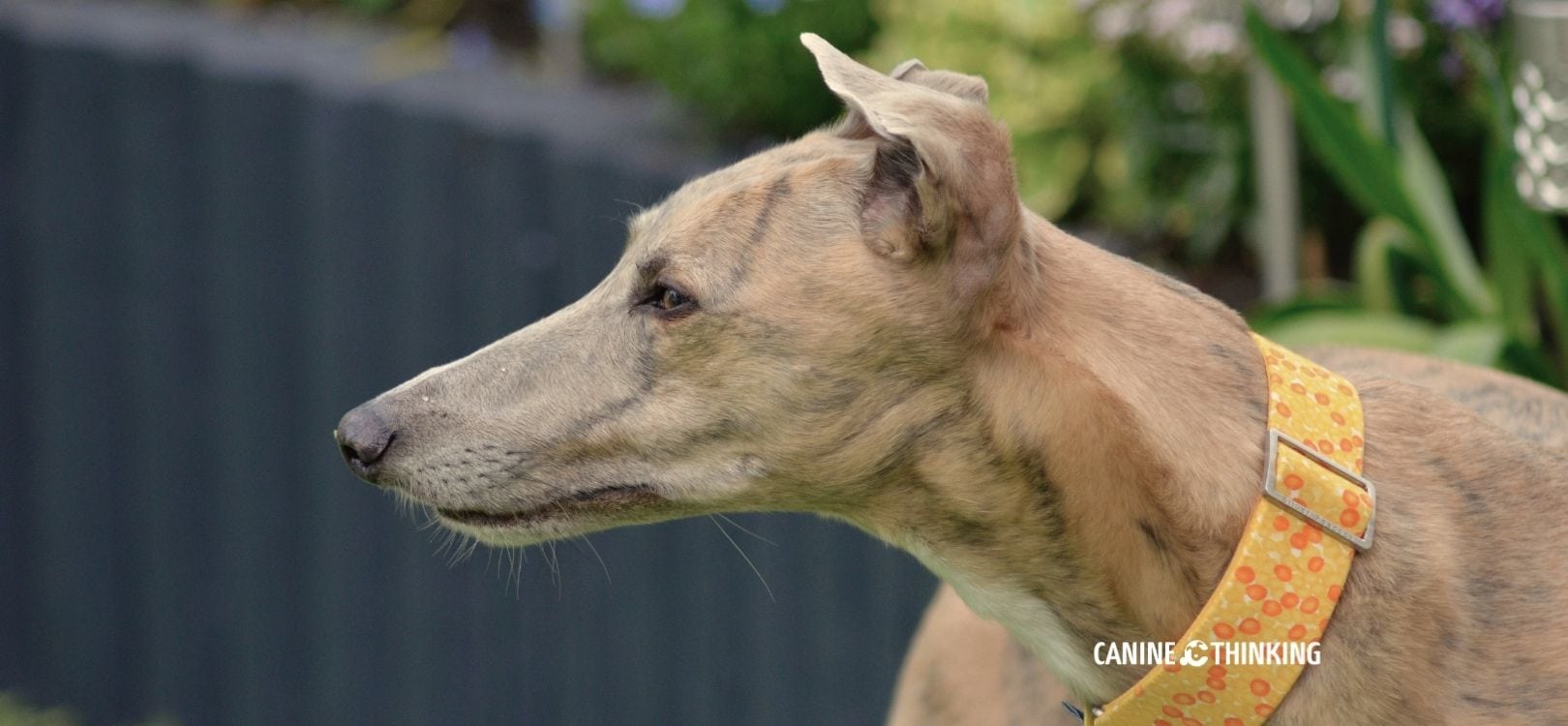
Pain doesn’t have to be obvious to shape someone’s entire experience of the world.
Even in humans – people who can speak, explain, and choose whether to disclose – pain is often missed, minimised or misunderstood. People adapt. They compensate. They stop mentioning it because it feels normal, or because explaining takes more energy than they have. And actually that can be true about both physical and emotional pain.
If that’s true in our own species, it also matters when we talk about dogs.
Invisible Pain Day was set up primarily with reference to emotional pain – but the sensory and emotional components of pain can’t easily be separated – arguably if at all. Emotional and physical pain share the same regions of the brain, with those activated by physical pain being the same ones that process emotional distress. So for me, Invisible Pain Day is about recognising how much pain of any form can exist beneath the surface – shaping behaviour, emotions and resilience – often long before it is recognised.
Most of the time, pain doesn’t look dramatic or obvious. It looks ordinary, familiar, and easy to explain away – until you start joining the dots.
And it is far more common in dogs than people realise. But you can see it – when you know how to look. And I think our dogs deserve that level of care and attention.
Pain doesn’t have to look dramatic
There is a quiet assumption that if pain were significant, we would see it. That assumption doesn’t hold up very well – even with people. And it holds up even less well with dogs – even if we restrict this discussion to the physical, sensory aspects of pain, which we often think ought to be quite obvious.
So why aren’t they?
Dogs don’t know that showing pain might lead to relief. As humans we are accustomed to advocating for ourselves, if we choose and are able to do so, by explaining what we feel in order to access pain relief options. That’s not the case for our dogs, and in fact from an evolutionary perspective, showing pain can be detrimental to safety – it makes you more vulnerable.
Interestingly I do see dogs who, with really good communication in place, will come to seek support when something is painful (either emotionally or physically) – because they have learned that they are both listened to and helped. I also see dogs who have learned that signs of discomfort go unrecognised, are dismissed or worse, are met with unpleasant consequences either unintentionally or intentionally (albeit with good intentions at the core). Think about a vet exam – did that feel a bit uncomfy? ok let me test it again, or how about this way? Showing any discomfort can mean more follows! I definitely see dogs who, at one time used to communicate well, but later on just shut down and stand there, saying as little as possible. As a human who has had more injuries than I care to count from years of various sports that my parents despaired of, I feel apprehension sometimes when someone goes to look at the injured area, but at least I can point and say here and don’t touch it too hard!
So instead of obvious signs, pain in dogs often shows up as things like:
- stillness or freezing
- fidgeting or avoidance
- focused attention or complete inattention
- perceived goofing around or ‘playfulness’
- seeking reassurance or appeasement
- irritability or reduced tolerance
Only a small number vocalise, snap or bite – and by the time pain looks like that, it is, in my experience, quite pronounced. Although there is a whole other topic we could go into on perceived breed differences in pain sensitivity and expression. How often are things like vocalisations dismissed because they are just a ‘wimpy’… name your breed of choice. How can we say that? I have yet to meet one of ‘those’ dogs where addressing pain doesn’t remove the so-called ‘wimpy’ responses.
So let’s be very clear, the absence of ‘obvious’ pain behaviours like withdrawal, vocalisation or growling, snapping, biting, doesn’t mean the absence of pain. It may well mean that that we simply aren’t looking properly, or that the dog has found another way to ‘cope’ or ‘not cope’ in that moment.
Pain can be really hard to spot.
Stress changes how pain feels – and how it shows up
Have you ever continued to do something you really enjoy and are excited about when you have some sort of pain? Or injured yourself during a highly stressful experience and not known the extent of that injury until later? That is the effect of arousal on pain sensation. And as someone who has both finished an ice hockey match with a cracked rib and walked away from someone crashing into my car without realising until later that I had split one of the tendons in my ankle, I can personally attest to the effectiveness of stress at dulling pain in both scenarios.
In practical terms, this means pain can look highly inconsistent.
A dog may:
- appear ‘fine’ during activities
- ‘tolerate’ an examination
- ‘cope’ in high-arousal situations
…and then struggle later. Sometimes immediately, sometimes much later.
This inconsistency is one of the reasons pain is so often dismissed or questioned.
But variability isn’t evidence against pain. It’s often part of the picture.
Pain is personal – it can exist even when nothing shows on imaging or investigations.
Pain is subjective. Always.
What is excruciating for one individual may barely register for another. This isn’t about resilience or weakness – it’s about how the nervous system processes information. And yes, this is backed up by science.
Have you heard of nociplastic pain? It’s a fairly recently defined ‘type’ of pain – for example you may have heard of ‘neuropathic’ pain which is pain from nerves. Nociplastic pain is an incredibly important concept when it comes to ‘hidden’ pain. In broad terms, it means pain from altered pain* processing*. So pain where there is no clear injury or disease to tissue. One of the key mechanisms by which this can happen is central pain sensitisation or wind-up pain, which often occurs with chronic pain conditions. It’s a bit like the brain and spinal cord going into overdrive and becoming really sensitive to sensory input. It can result in hyperalgesia where painful things become much more painful than they ordinarily would be and allodynia where things are painful that really shouldn’t be.
So now let’s think again about those ‘wimpy’ dogs who squeal or do a brief limp at the slightest thing. Wimpy or a form of nociplastic pain? Or another form of pain that actually just hasn’t been diagnosed yet.
It’s not quite so simple, is it?
Just because we can’t yet see the underlying cause, it doesn’t make the pain imaginary for the individual experiencing it.
If the nervous system says it hurts, it hurts.
If we sit with that for a moment, it changes how we interpret a lot of behaviour we’ve been taught to dismiss.
The kinds of hidden pain we most often see in dogs
Hidden pain in dogs rarely looks dramatic. Most of the time, it lives in the background – shaping behaviour, mood, emotions, subtle changes to posture, movement and daily habits and activities – long before anyone calls it pain.
Some of the most common forms include:
Musculoskeletal pain
Problems with joints, bones and soft tissue (and there are many forms) often don’t cause limping until they are severe. Dogs compensate first.
Maybe you’ll notice some stiffness, reluctance to jump or lie down, changes in play, or reduced tolerance for physical contact. By which point the pain is probably already pretty unpleasant. Did you first notice the subtle changes in how your dog shifted their weight, or got on the sofa? The change in their movement as they ran around? Or their preference to sniff just a tiny bit more – or less – on a walk? Young dogs are not immune either, but it often presents more as bitey, mouthy, grabby, charging around behaviour. Excessive play, an inability to rest and settle. Sensitivity to sounds and smells and touch are also common.
Fascial pain (fascia is the connective tissue that wraps around all the structures and organs in the body) is even more highly underdiagnosed than what we typically think of as musculoskeletal pain.
Gastrointestinal discomfort
Ongoing gut pain doesn’t always involve vomiting or diarrhoea. It can look like restlessness, difficulty settling, irritability, or heightened sensitivity to stress. It can look like changes in appetite (sometimes more, sometimes less), picky eaters, scavengers. It can even cause lameness, particularly through the hindquarters, but not exclusively. I will never forget the little Bedlington I worked with who went markedly lame on his right hind leg every time he ate fish. Took us a while to work out, especially as he didn’t present with any classic ‘upset gut’ symptoms and had other known musculoskeletal issues.
Ongoing gut pain doesn’t always involve vomiting or diarrhoea. It can look like restlessness, difficulty settling, irritability, or heightened sensitivity to stress. It can look like changes in appetite (sometimes more, sometimes less), picky eaters, scavengers. It can even cause lameness, particularly through the hindquarters, but not exclusively. I will never forget the little Bedlington I worked with who went markedly lame on his right hind leg every time he ate fish. Took us a while to work out, especially as he didn’t present with any classic ‘upset gut’ symptoms and had other known musculoskeletal issues.
Dental and oral pain
One of the most overlooked sources of chronic pain and it must be truly awful to live with.
Many dogs with significant dental disease continue to eat and play until they really can’t any more (by which time it must be excruciating – ever had dental pain?). Instead, we may initially see increased chewing and biting, a preference to eat more on one side than another, increased smell (dog breath should be fresh – yes, really!), or any of the more general behavioural changes that accompany pain and don’t necessarily point to the mouth.
And then there is ear pain, eye pain, skin pain, headaches….
The variety of pain that can be experienced (not just body locations, but types of pain) is one of the many things that further complicates hidden pain, especially in non-verbal species who can’t tell us easily ‘how’ the pain sensation feels – although we can sometimes make inferences from behaviour.
When evidence lags behind experience
During my own most recent spinal surgery, my surgeon was genuinely surprised by how much scar tissue had formed in an area that had never been operated on before. It hadn’t shown on the imaging beforehand either – and I had a lot of imaging. The surgery took far longer and was far more complex than expected, but that finding helped explain symptoms that previously couldn’t be accounted for. In fact it took visits to several surgeons before the issue was thoroughly investigated, because the initial imaging didn’t show what they thought it ‘should’ with the symptoms I had. Which included loss of mobility in one leg!
It was a powerful reminder that imaging is a tool – not a verdict. And the pain was certainly very real.
The same principle shaped Rupert’s story.
Rupert: hidden pain in plain sight
My current rescue lurcher Rupert showed subtle signs of pain from the time he was a very young puppy. Nothing dramatic. Nothing obvious. Just small things that didn’t quite add up, alongside other symptoms, but which could easily be explained away by ‘being a puppy’ as much as anything else. Except that my closest vet team trusted my observations enough to start pain relief – even if they couldn’t ‘see’ the issue – and he responded to it.
But even within his veterinary team there was doubt that the issue was as ‘unusual’ as I described it. As he grew, panosteitis was diagnosed and he had gut issues – both of which offered reasonable explanations for* some* of his pain symptoms. But not all. And when those improved, the pain continued to get worse.
We tested for and imaged everything – more than once. And continued to have to add in more pain relief as his behaviour and movement deteriorated. Yet to most people, Rupert still looked like a highly active, fit, busy, young lurcher who could bomb across a field at incredible speeds – and loved to do just that. Remember what we said about arousal?
But we kept pushing to find the issue and with the help of his brilliant neurosurgeon, we are at least some of the way there. Rupert has occult tethered cord syndrome (oTCS) – a form of spinal cord tethering that doesn’t show up on imaging, even on dynamic MRI. The surgery itself is actually part of the diagnostic process. That’s a really big decision to make – and it’s where building and trusting a really comprehensive set of observations, physical and behavioural is critical.
At the end of November, part of his spinal cord was surgically detethered and despite surgical trauma, complications, and the fact that not everything could be addressed as planned because of those complications, the change in him post surgery was profound. Within days he was more comfortable in his body, less reactive and moving more freely. He offered a sit (a bit of a wonky one, but a sit nonetheless) for the first time in about 9 months. Prior to that he physically couldn’t get into a sit position. His touch sensitivity is improved, he can lift his tail, his gut symptoms are improving, his movement is better.
It’s early days with a lot of ups and downs and unknowns, but the difference is very real.
To the outside world before surgery, Rupert looked like a young lurcher who just struggled to manage himself and was constantly hyperaroused.
The truth is that his capacity to cope was enormous.
It’s just that his pain was bigger.
Rupert’s story is not exceptional because it is unusal. It is exceptional only because we were able to keep looking when the evidence lagged behind the experience – something many dogs never get the benefit of.
That is hidden pain.
Pain and emotions are inseparable
Pain doesn’t just hurt. It changes how you think and feel.
It affects sleep, mood, emotional regulation, concentration and learning. It turns simple tasks into hard ones. It erodes tolerance and drains resilience. It affects all areas of health, not just the painful body part.
If you’ve had pain, you’ll recognise this.
Dogs don’t get to explain this. We have to notice instead.
When pain is hidden, disbelief becomes part of the problem
Not least because we actually don’t want to think that our dogs might be in pain. Hidden pain asks even more of us.
It asks us to look beyond labels, to notice subtle patterns, to keep track of those ‘isolated’ incidents, to not judge by breed or age or ‘normalise’ unwanted behaviours. Sometimes it is just a sense that “something isn’t right” – even when tests don’t give us tidy answers – and we have to listen to that.
Because when pain is invisible, disbelief can, if we aren’t very careful, add another layer of suffering.
Hidden doesn’t mean imaginary
Hidden pain is real.
It shapes emotions.
It shapes behaviour.
It shapes day to day life.
And when we start from that understanding, the way we support dogs – and the people who love them – changes fundamentally.
Most dogs with hidden pain don’t look unwell.
They look busy and restless. Anxious. Withdrawn. Sensitive. Inconsistent. Hyperaroused. ‘Difficult’ or simply “Fine, most of the time.”
This is why hidden pain matters so much in non-verbal species. We do not get a neat description of what hurts or how it feels. Instead, we have behaviour, movement, emotional state, patterns over time, and the small changes that only show up when we pay close attention.
Pain doesn’t exist in isolation. Genetics, early experiences, learning history, environment, relationships, stress and unmet needs all influence how pain is experienced and how it shows up. Behaviour and pain shape one another constantly.
Our responsibility is to pay attention, to trust patterns over time, to keep asking thoughtful questions and to advocate for our dogs when something doesn’t sit comfortably – even when there isn’t a neat explanation yet.
A phrase that has always stayed with me, from the brilliant Sarah Fisher of Animal Centred Education, is that we can question everything, but we must always believe the dog.